Godzilla Minus Zero Opens to $63 Million Worldwide
Published on · Updated on
Minus One's sequel tops the global box office with $63 million, sets a live-action foreign-language record in North America and nearly triples its predecessor.
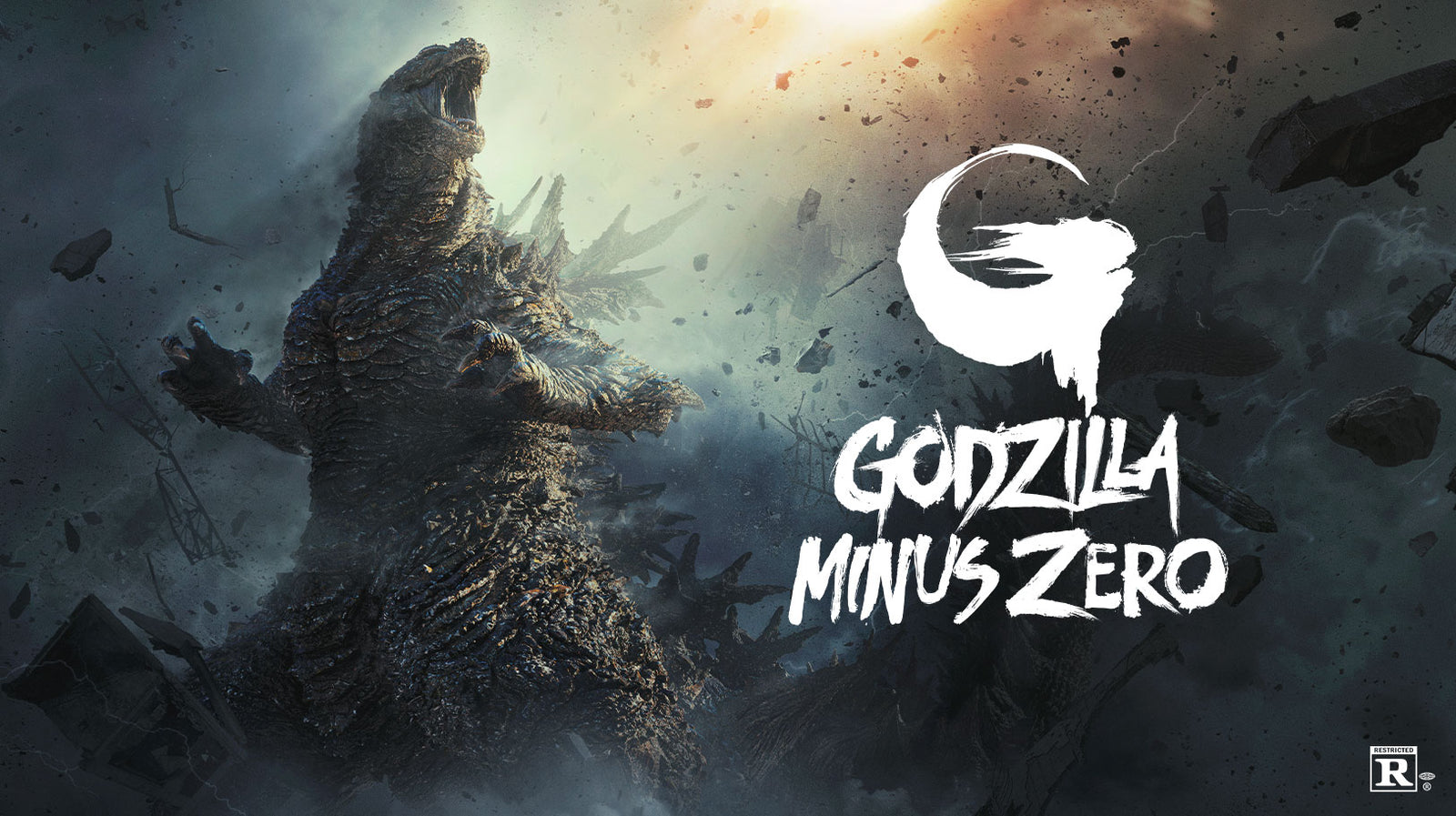
Godzilla Minus Zero grossed $63 million in its opening weekend, November 6-8, 2026, and finished the frame as the most-watched film on the planet. Takashi Yamazaki's sequel pulled $31.6 million in the United States and Canada — the biggest opening ever for a live-action foreign-language film in North America — plus another $31.4 million from more than 100 territories, including roughly $17 million in Japan. A near-simultaneous global rollout, the weight of IMAX screens and strong audience word of mouth explain the result, which is nearly triple the debut of its predecessor, Godzilla Minus One (2023).
How much did Godzilla Minus Zero make in its opening weekend?
Figures released by Toho and GKIDS, the distributor handling North America, confirm the best debut in the franchise's 72-year history. The film played in 3,254 theaters across the United States and Canada for a per-screen average of $9,714 — a rare result for a Japanese-language production shown subtitled.
| Metric | Result |
|---|---|
| Worldwide opening weekend | $63.0 million |
| North America (3,254 theaters) | $31.6 million |
| International (100+ territories) | $31.4 million |
| Japan | $17.0 million (¥2.7bn) |
| Worldwide IMAX | $21.3 million (34%) |
| IMAX in North America (429 screens) | $12.7 million (40%) |
| Estimated budget | Under $20 million |
The daily breakdown reveals event-movie behavior: $14.6 million on Friday, including $6.7 million in previews, then $9.45 million on Saturday and $7.56 million on Sunday. Front-loading usually points to a fan-driven audience, but the soft Sunday drop and an A CinemaScore suggest word of mouth kept screenings full through the weekend.
On the following Monday the film added $2.09 million; on Tuesday it took $3.28 million, up 57% on the previous day. That pushed the domestic total to about $36 million and the worldwide figure to $67.4 million within its first full week — roughly the level Minus One needed its entire run to reach in North America.
A record debut for a foreign-language film
The $31.6 million North American figure comfortably beat the previous record for a live-action foreign-language release, held by Zhang Yimou's Hero (2004) with a $17.8 million opening. The new mark is nearly double the old champion and leaves Minus Zero behind only The Passion of the Christ (2004), which opened to $83.8 million in Aramaic, Latin and Hebrew.
Other comparisons help frame the achievement. It is the biggest opening in GKIDS history, beating the $13 million debut of Hayao Miyazaki's The Boy and the Heron (2023). It is also the fourth non-English-language film to top the North American weekend chart and the first Japanese production to lead both Japan and the United States on the same weekend — a first in more than seven decades of Japanese cinema.
"This historic opening shows how deeply audiences around the world connect with Godzilla and with Takashi Yamazaki's vision. Our first near-simultaneous global release was built on that belief."
IMAX, premium formats and the big-screen effect
Godzilla Minus Zero was designed for large-format cinema. It is the first Japanese production shot specifically for IMAX, and the box office reflects it: IMAX auditoriums accounted for $21.3 million worldwide, about 34% of the total, with $12.7 million of that from the United States and Canada alone — 40% of the domestic gross from 429 screens.
Adding IMAX and other premium formats such as Dolby Cinema and large-format houses, the segment represented 74% of the North American weekend gross. That is a higher share than blockbusters that traditionally lean on those screens, such as Christopher Nolan's The Odyssey, which drew 52% of its $123.5 million opening from premium formats.
"This landmark release is the result of a thoughtful campaign by GKIDS and Toho that emphasized the 'must see' intensity of the theatrical experience and director Takashi Yamazaki's vision. We're so happy to see audiences embrace 'Godzilla Minus Zero' at an unprecedented scale for an international film."
IMAX chief executive Rich Gelfond celebrated the result in a statement carried by trade press: "We are proud to call this the first 'Filmed for Imax' release from Japan and delighted fans are overwhelmingly choosing to experience it on our screens." The strategy included an IMAX-exclusive window before the wide release, starting November 3 — Godzilla Day, which marked the character's 72nd anniversary.
Godzilla Minus Zero vs. Godzilla Minus One
The comparison with its predecessor is the most repeated number in box office reports, and for good reason. Godzilla Minus One opened to $11.4 million in the United States and Canada in December 2023 and finished its domestic run at $57.1 million, becoming the highest-grossing Japanese live-action film in the region's history. Worldwide it earned $114 million and won the Academy Award for Best Visual Effects.
| Comparison | Minus One (2023) | Minus Zero (2026) |
|---|---|---|
| US/Canada opening | $11.4m | $31.6m |
| Worldwide opening | $41m | $63m |
| US/Canada total | $57.1m | $36m in 10 days |
| Worldwide total | $114m | $82m before weekend two |
| Budget | Under $15m | Under $20m |
| Rotten Tomatoes (critics / audience) | 99% / 98% | 90% / 96% |
| CinemaScore | A | A |
Critical reception is slightly below the first film, but audiences responded in much the same way: 95% positive reviews and an 85% definite recommend on PostTrak, plus the same A CinemaScore. For a release that depended on turning curiosity into a movie ticket, that combination is what separates a fan-driven debut from a season-long hit.
There is a spillover effect as well. According to JustWatch, Godzilla Minus One became the most-watched film on any streaming platform during its sequel's opening week, a sign that part of the audience is catching up before heading to theaters. The first film had already been re-released theatrically in 2025, a test run for bringing Japanese Godzilla films back to cinemas on a regular basis.
Weekend chart: a comfortable lead
On the global chart for November 6-8, Godzilla Minus Zero finished ahead of another major Asian release, the Indian epic Ramayana: Rise of a Legend, which took $52.2 million. Warner's animated The Cat in the Hat completed the podium with $30.5 million.
| Rank | Film | Worldwide weekend |
|---|---|---|
| 1 | Godzilla Minus Zero (Toho/GKIDS) | $63.0m |
| 2 | Ramayana: Rise of a Legend (Sony) | $52.2m |
| 3 | The Cat in the Hat (Warner) | $30.5m |
| 4 | Stray Kids "Run It" Live Viewing | $13.9m |
| 5 | Clayface (Warner) | $13.5m |
The numbers are estimates released by distributors and compiled by measurement services such as Rentrak and Comscore, subject to later revision. The frame was also the year's strongest for new admissions: the top ten grosses combined for $121.6 million in the United States and Canada, up 74.4% on the previous weekend.
Japan, Brazil and what comes next
In its home market, Godzilla Minus Zero opened on November 3, the holiday known as Godzilla Day, and earned ¥910 million (about $5.75 million) on its first day alone from more than 590,000 admissions — the biggest opening day for a live-action film in Japanese history, beating Harry Potter and the Chamber of Secrets. Its first weekend brought ¥1.13 billion and 699,000 tickets; in six days it reached ¥2.54 billion and 1.61 million admissions.
On November 16, Toho said the film had passed ¥4 billion and 2.5 million tickets in Japan over 13 days, holding first place for two consecutive weekends, and that worldwide ticket sales had topped ¥15 billion. The gap between the territory counts in the two updates — more than 100 countries on November 9 and about 70 on November 16 — was not explained by the distributor, which argues for caution about the exact number of markets.
For viewers outside Japan, the film is rolling out through regional partners, with subtitled Japanese-language prints. The story is set in 1949, two years after the events of Minus One, and puts the Shikishima family in front of a new threat: King Ghidorah. Yamazaki returns as writer, director and visual effects supervisor, and the main cast keeps Ryunosuke Kamiki, Minami Hamabe and Hidetaka Yoshioka. Anyone who has not seen the previous film can check the films section and the Monarch: Legacy of Monsters season 3 report for more kaiju context before the screening.
Projections point to about $105 million through the second weekend, which would put Minus Zero close to matching or beating the $114 million lifetime total of Minus One within days. With a budget under $20 million and estimated marketing spend below $10 million in North America, the film had already paid for itself in its first weekend — a rare case of commercial efficiency in the current market.
The performance also sets an uncomfortable benchmark for Hollywood. In March, Warner and Legendary release Godzilla x Kong: Supernova, an English-language production with a far larger budget that will inevitably be measured against the Japanese film. For Toho, the result consolidates a coordinated global release strategy likely to be repeated on future franchise entries.
More than an isolated record, the weekend confirmed that a subtitled Japanese film with a modest budget and a campaign built around the theatrical experience can lead the worldwide box office. It is the strongest commercial answer the franchise born in 1954 has ever received — and a hard argument to ignore for anyone still doubting the global reach of Asian cinema.
Sources: figures from Toho, GKIDS, Rentrak/Comscore and trade coverage, including Folha JF, Variety and the official Godzilla website.
Suggested and related articles

The Duchess and Other Period Dramas on Prime Video

Ebenezer Opens at No. 1 With $19 Million Domestically

Is HERSHEY Based on a True Story? What's Real and What's Not
Is Godzilla Minus Zero a Sequel to Minus One? Yes

Cliff Booth: Netflix date, IMAX window, what is confirmed