Harry Potter: Why Gryffindor is the only chosen house
Published on · Updated on
An in-depth look at Harry Potter reveals Gryffindor is the sole Hogwarts house where a student's personal choice truly shapes the Sorting Hat's final verdict.
The annual opening ceremony of the academic term at Hogwarts School of Witchcraft and Wizardry, celebrated across J.K. Rowling's literature and brought to life in the iconic Warner Bros. Pictures franchise streaming worldwide, remains one of fantasy cinema's most compelling narrative moments. At the very heart of this ritual sits the Sorting Hat, an ancient enchanted artifact imbued with the wisdom and telepathic depth of the castle's four legendary founders: Godric Gryffindor, Salazar Slytherin, Rowena Ravenclaw, and Helga Hufflepuff. For generations, readers and film enthusiasts operated under the assumption that the hat merely honors the personal desires of any young student who asks. However, a meticulous examination of franchise canon reveals a fascinating nuance: Gryffindor is the only house at Hogwarts where a student's conscious choice can truly determine the final verdict.
This insight originates in one of the most poignant conversations featured in the epilogue of Harry Potter and the Deathly Hallows - Part 2. Standing on Platform 9 ¾ at King's Cross station, as Harry comforts his middle child Albus Severus Potter over the terrifying fear of being sorted into Slytherin, he delivers a statement that shaped fan lore for decades:
"Albus Severus, you were named for two headmasters of Hogwarts. One of them was a Slytherin and he was probably the bravest man I ever knew. But if it matters to you, the Sorting Hat takes your choice into account. It did for me."
While Harry spoke from a place of fatherly affection to soothe an eleven-year-old's nerves, his words only told half of the magical story. By evaluating the journeys of various characters across the overarching saga and reflecting upon reporting from CBR, it becomes clear that the Sorting Hat does not function as an open menu for whimsical preferences. In the realm of magic, displaying the sheer audacity to challenge a preordained placement is itself the ultimate hallmark of bravery — the foundational virtue of Godric Gryffindor's house.
Harry Potter's initial trial and his explicit rejection of Slytherin
The clearest demonstration of this psychological mechanic occurs during the opening chapters of Harry Potter and the Sorcerer's Stone. The moment the brim touches Harry's brow, the sentient hat perceives tremendous raw material: unyielding resolve, latent ambition, and an undeniable aptitude for greatness — traits historically championed by Salazar Slytherin. The hat openly argues that Slytherin House would pave the boy's road to glory.
Haunted by what he learned regarding Lord Voldemort's past and warned by Ron Weasley and Rubeus Hagrid, Harry clutches his stool and repeats an urgent silent prayer: "Not Slytherin, not Slytherin." Recognizing this firm pushback, the hat yields: "Not Slytherin, eh? Are you sure? You could be great, you know... Well, if you're sure, better be... GRYFFINDOR!"
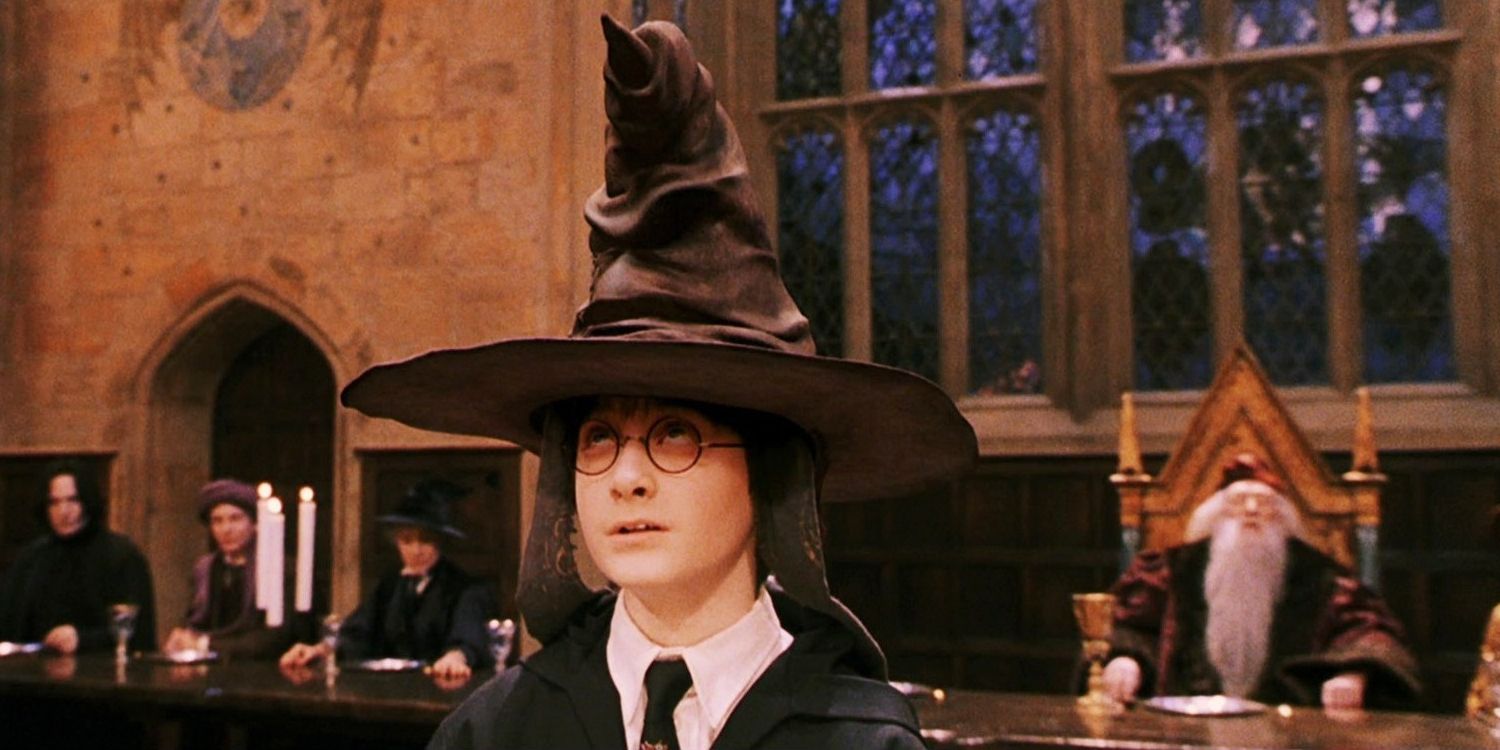
Crucially, Harry never explicitly asked for Gryffindor; he demanded to be kept away from Slytherin. For an eleven-year-old child to challenge a thousand-year-old magical judge requires monumental courage. That act of defiance demonstrated the exact moral bravery Godric Gryffindor sought. The hat did not surrender out of subservience; it conceded because Harry's defiance proved that courage was already his defining virtue.
Hermione Granger and the four-minute near-Hatstall
Hermione Granger's sorting presents an equally revealing case study within pop culture analysis. In wizarding lore, a Hatstall refers to any ceremony where the Sorting Hat deliberates for more than five full minutes. Hermione was a celebrated near-Hatstall, spending close to four minutes under the brim as the hat wavered between Ravenclaw and Gryffindor.
On academic paper, Hermione appeared to be the quintessential Ravenclaw candidate. She had memorized all assigned textbooks before stepping onto the Hogwarts Express, placed scholastic discipline above social leisure, and exhibited an unquenchable thirst for intellectual mastery.
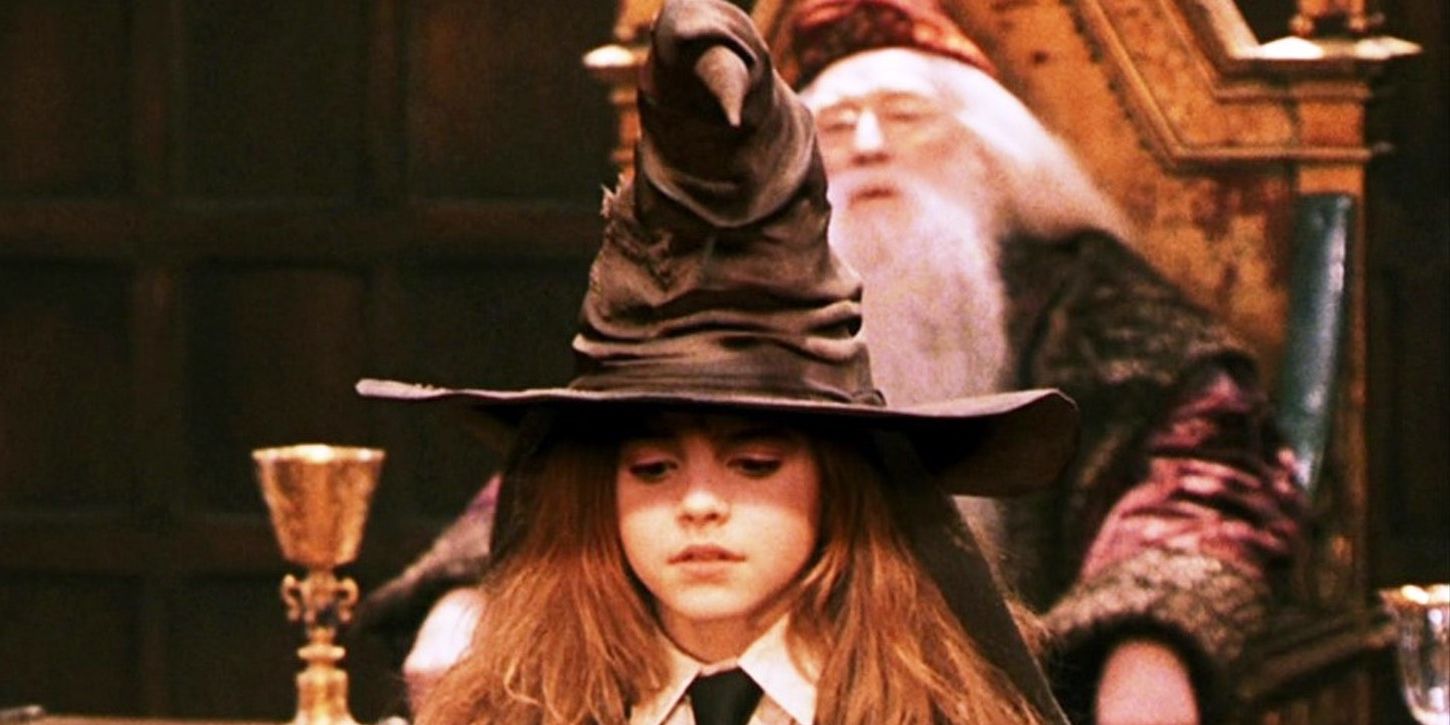
Why did the scales tip toward Gryffindor? Hermione herself offers the key insight during the climax of the first story:
"Books! And cleverness! There are more important things — friendship and bravery and — oh Harry, be careful!"
Deep within her values, Hermione placed moral fortitude, protective loyalty, and the resolve to fight injustice far above sterile academic prestige. Her subconscious yearning to champion righteous causes guided the hat's choice: her formidable intellect would serve as armor in the field rather than mere academic decoration.
Family expectations: Ron and Percy Weasley
Examining the Weasley family further clarifies the Sorting Hat's selective listening. Ron Weasley displays all the hallmarks of a loyal Hufflepuff: steadfast friendship, humility, a quiet aversion to vanity, and an instinctual readiness to sacrifice his own comfort for those he loves.
Yet Ron's burning hope was to forge an identity alongside his accomplished older brothers within Gryffindor. Under the hat, his desire to stand with his family and new friend Harry resonated strongly, and the hat granted that wish.
Conversely, Percy Weasley exhibited archetypal Slytherin tendencies: unyielding ambition, unwavering devotion to bureaucratic hierarchy, and a willingness to sever family ties to advance his Ministry career in Order of the Phoenix. If the hat looked strictly at eventual adult behavior, Percy belonged in Slytherin. Yet at eleven, his intense commitment to upholding the honorable Gryffindor tradition of Bill and Charlie swayed the hat's verdict.
The definitive counter-proof: Neville Longbottom and Hufflepuff
Any lingering doubt about the uniqueness of Gryffindor as the sole house of choice is erased by Neville Longbottom. Neville stands as the definitive proof that the Sorting Hat does not grant house requests outside of Gryffindor.
Crushed by the formidable expectations of his grandmother Augusta and the tragic legacy of his Auror parents, Frank and Alice Longbottom, young Neville was terrified that he lacked the nerve to survive in Gryffindor. During his ceremony — another memorable near-Hatstall — Neville desperately argued with the hat, pleading to be placed in Hufflepuff where he believed he could avoid brutal public scrutiny.
The Sorting Hat flatly denied Neville's request. Detecting the dormant courage that would one day lead Neville to sever Nagini's head with the Sword of Gryffindor during the Battle of Hogwarts, the hat refused his petition for Hufflepuff and demanded Gryffindor until the boy relented.
Neville's experience shatters the misconception of universal student choice. Asking for Hufflepuff out of fear will not work; pleading for Ravenclaw without authentic intellectual flair will fail; seeking Slytherin without cunning is rejected. Only when choosing Gryffindor does the act of choosing align perfectly with the house's foundational virtue.
Comparative breakdown: Student desires vs. Hat determinations
To summarize how personal desire interacted with magical destiny, the following table contrasts the critical sorting moments across the saga:
| Character | Initial Assessed Trait | Requested or Rejected House | Final Sorting Outcome |
|---|---|---|---|
| Harry Potter | Ambition and talent (Slytherin) | Explicit rejection of Slytherin | Gryffindor (Choice granted) |
| Hermione Granger | Analytical genius (Ravenclaw) | Ethical priority on bravery | Gryffindor (Choice granted) |
| Neville Longbottom | Dormant heroism and humility | Explicit plea for Hufflepuff | Gryffindor (Plea denied) |
| Percy Weasley | Drive and status (Slytherin) | Desire for family tradition | Gryffindor (Choice granted) |
The philosophy of courage: Godric Gryffindor's true legacy
When connecting these narrative clues across cinematic history, Hogwarts' hidden magic reveals its philosophical core. The Sorting Hat was never built to serve as a passive classifier; it embodies the living wills of the four medieval sorcerers.
Ravenclaw sought intellect; Slytherin prized cunning; Hufflepuff valued patient toil. None of those attributes can be spontaneously summoned simply by sitting upon a stool. Moral courage, however, is a conscious decision. Daring to challenge destiny, voicing conviction in the face of authority, and embracing the uncertainty of perilous adventures are inherently brave acts. Gryffindor welcomes not merely the naturally fearless, but all those who possess the fortitude to choose courage over comfort.
Suggested and related articles
Dune 3 Popcorn Bucket Returns With Wild Double Maw Upgrade
Return of the King: Aragorn's Best Quote in Movie History
Hugh Jackman The Death of Robin Hood Hits No. 1 on HBO Max

50th SP Film Fest awards Colombian drama on armed conflict
Hokum: 2026 Psychological Horror Dominates Streaming